


Best universities in the world for Physics
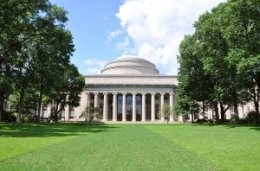 If you want to study in the US at one of the world’s leading tech-focused institutions, chances are you're dreaming of either the Massachusetts Institute of Technology or California Institute of Technology – MIT or Caltech. From quantum physics to supercomputers, string theory to nuclear reactors, these are the places where the world’s best and brainiest gather to push back the frontiers of scientific and technological knowledge.
But how do these top tech schools compare, and how can you decide whether MIT or Caltech would suit you best? Here’s a quick overview, with more detailed explanation below.
MIT |
Caltech |
|
|
|
|
|
|
|
|
Location |
|
|
|
Student community |
|
|
|
Fees and funding |
 |
QS World University Rankings® 2016-2017
The Massachusetts Institute of Technology is pretty much unbeatable in the QS World University Rankings® – it’s been ranked the world’s number one for the past five years running. The California Institute of Technology is no slouch though, and retained its position of fifth in the world recently.
While MIT gets higher scores in the qualitative measures used to compile the rankings (two huge global surveys of academics and employers), Caltech comes out ahead on two of the quantitative measures used: faculty-student ratio and research citations per faculty member. In the 2016-2017 edition of the ranking, Caltech is ranked fourth in the world for research citations per faculty member – reflecting the huge influence Caltech has in the research sector despite its small size.
In the latest rankings, the biggest gap between the two is in the percentage of international faculty members, where MIT has its largest lead.
Both are well known as leading tech schools, and are particularly strong in the science and technology fields. Thanks to its prestigious Sloan School of Management, MIT also has a strong international reputation for social sciences and business-related courses.
These strengths are reflected in the QS World University Rankings by Subject 2017, which is based upon academic reputation, employer reputation and research citations data. Despite its specialized focus, MIT features in the top 20 of each broad subject area in the subject rankings, including arts and humanities (16th).
Caltech doesn’t have quite such a strong all-round performance, though it still places within the world’s top 200 for every broad subject area – no small feat. Its strongest areas by far are natural sciences (8th) and engineering and technology (17th).
As you can see in the table below, MIT boasts a large number of first place rankings (12 in all), especially in engineering and technology subjects, and features in 32 of the 46 different subject rankings. By comparison, Caltech only features in 18.
| MIT and Caltech in the QS World University Rankings by Subject 2017 | ||
| MIT | Caltech | |
| Accounting & finance | 2nd | |
| Anthropology | 50th | |
| Architecture | 1st | |
| Art & design | ||
| Biological sciences |  8th 8th |
|
| Business & management | 4th | 101-150 |
| Chemistry | 8th | |
| Communication & media studies | 22nd | |
| Computer science & information systems | 27th | |
| Earth & marine sciences | 5th | 7th |
| Economics | =38th | |
| Engineering (chemical) | ||
| Engineering (civil) | 51-100 | |
| Engineering (electrical) | 15th | |
| Engineering (mechnical) | 14th | |
| English language & literature | =29th | 151-200 |
| Environmental sciences | 3rd | =19th |
| History | 44th | |
| Linguistics | ||
| Mathematics | 12th | |
| Materials science | 20th | |
| Medicine | =12th | |
| Modern languages | ||
| Performing arts | =36th | |
| Philosophy | =16th | |
| Physics & astronomy | ||
| Politics | ||
| Psychology | =8th | |
| Social policy & administration | ||
| Sociology | =25th | |
| Sports-related subjects | ||
| Statistics | ||
Both top tech schools are located in small university towns within easy reach of a major city. MIT is in Cambridge, Massachusetts, a university town of under 150, 000 inhabitants which is also home to Harvard University – making this one of the world’s most prestigious hubs of academic tuition and research. Cambridge is close to Boston, one of the most culturally vibrant and historic cities in the Northeast US, which was ranked eighth in the latest QS Best Student Cities index.
Some 3, 000 miles away, Caltech is in the Californian city of Pasadena, a university town of a similar size to Cambridge, and a stone’s throw from the second-largest city in the US, Los Angeles, which was ranked joint 47th in the Best Student Cities ranking.
One of the major bragging points for Caltech students over their Northeastern rivals is the climate – southern California enjoys sunshine and warmth all year round, while MIT students get hot summers but freezing winters. Then again, a little seasonal variation is not necessarily a bad thing, and the New England region of which Massachusetts is a part of is famed worldwide for its beautiful fall colors.
Student community
Though both of these top tech schools are on the smaller side for world-class universities, MIT’s 11, 300-strong student body makes it roughly five times the size of Caltech, a crack-team of around 2, 240. Both institutions have a greater number of postgraduates than undergraduates, reflecting their research-intensive focus.
Well-established among the world’s top tech schools, both attract applications from talented students all around the world, leading to highly diverse student bodies. International students account for around 29% of enrolments at MIT, compared to 26% at Caltech.


